

The main problem with education
Whether it's at school or university, the one thing no one ever teaches you is how to teach yourself. We often just end up drilling specific exercises and mindlessly memorizing information so that when exam time comes around, we pass the test. But once the test is over, that information has outlived its usefulness, and there's no guarantee that information will be retained. In the end, we're really just learning how to pass our tests.
Here's the real question: does this approach of repetition and memorization help us truly understand the subject material? The academic consensus nowadays is that it doesn't. In fact, what's more important than any individual topic is knowing how to study, but for some reason, this point is often overlooked. So, what can we do to remedy this?
Well, there are various techniques and exercises that can be applied to the educational process to help make it more efficient and engaging. Keep scrolling to uncover some of the secrets of effective learning.
Learning Techniques
Five Strategies from Barbara Oakley
-
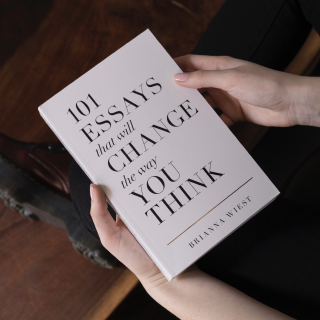
Two Ways of Thinking
Deep understanding comes from being able to toggle back and forth between focused and diffused thinking.
-

Recall
Improving your ability to remember key bits of information help to connect different parts of the brain.
-

Interleaving
When you learn multiple skills at the same time, they reinforce each other.
-
Questions
When listening to your teacher, think up a good question, something you're really itching to know.
-

Illusion of Competence
Test yourself, write it down, tell other people, and repeat the process in different settings. Only then can you be truly certain you've understood something.
TED Talks
For lovers of procrastination
Barbara Oakley's story.
Math didn't come naturally to Barbara in childhood. She thought of herself as more of a humanities person, and not a brilliant one at that. With an eye to becoming a linguist, after school she enlisted in the army, who sent her to learn Russian. After several years of service, during which she rose to the rank of Captain, Barbara left the army and decided to study engineering. It was during this time that she developed her learning methodology as she was forced to reprogram her brain for a different kind of learning. It turns out that when something doesn't come naturally to you, having to work hard to gain knowledge that other people may get at first glance gives you a deeper, more comprehensive understanding of the subject matter.
The Feynman Technique
More →Learn without forgetting
Facts and figures
On learning and the brain
-
86 billion
The number of neurons in the human brain
-
73%
The percentage of adults in the US who consider themselves lifelong learners
Pew Research Center
-
1,000 terabytes
The information storage capacity of a human
-
500 trillion
The number of nerve synapses responsible for learning in the average adult human
-
420 million
The number of adults under 25 with insufficient education for finding employment
World Bank, 2017
-
26 years old
The age at which Albert Einstein published his groundbreaking paper on special relativity
-
1885
Development of the forgetting curve
-
1897
Publication of Ivan Pavlov's research on classical conditioning
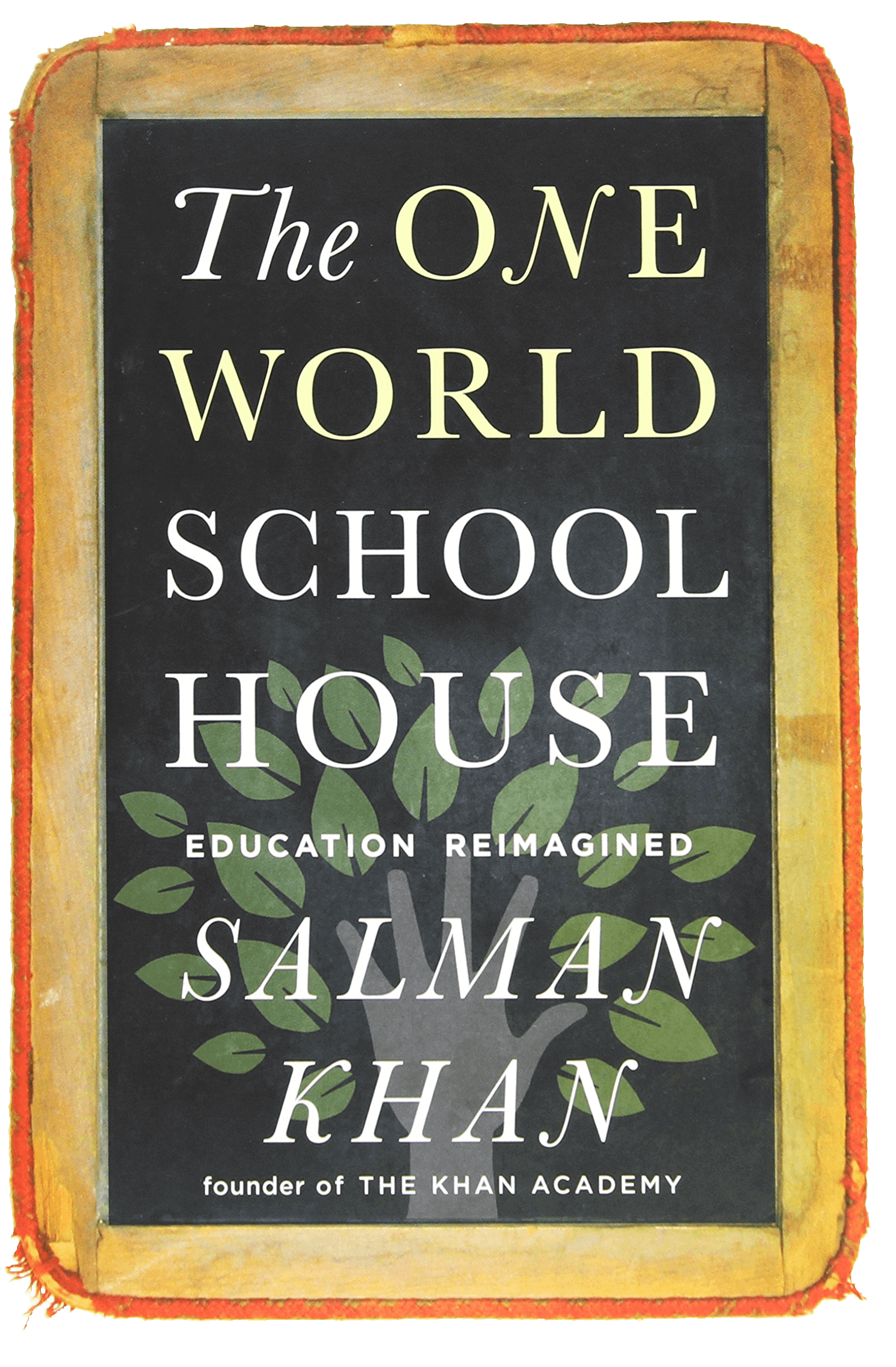
The One World Schoolhouse
Sal Khan's passion and innovation is transforming learning for millions of students worldwide. The One World Schoolhouse is a must-read for all who are committed to improving education so students everywhere can gain the skills and knowledge to be successful in school, careers and life.

Ten principles of rapid skill acquisition
by Josh Kaufman
-
1
Choose a lovable project.
-
2
Focus your energy on one skill at a time.
-
3
Define your target performance level.
-
4
Deconstruct the skill into sub-skills.
-
5
Obtain critical tools.
-
6
Eliminate barriers to practice.
-
7
Make dedicated time for practice.
-
8
Create fast feedback loops.
-
9
Practice by the clock in short bursts.
-
10
Emphasize quantity and speed.



